High Frequency Measurement: Accuracy Limits at GHz Speeds
Time
Click Count
High Frequency Measurement at GHz speeds is no longer defined by bandwidth alone. Accuracy now depends on how well a system controls mismatch, drift, phase error, noise, and calibration traceability.
As digital links, radar modules, RF components, and power electronics move higher in frequency, small errors become design-level risks. That shift makes High Frequency Measurement a strategic discipline across advanced industry.
Why accuracy limits in High Frequency Measurement are becoming more visible
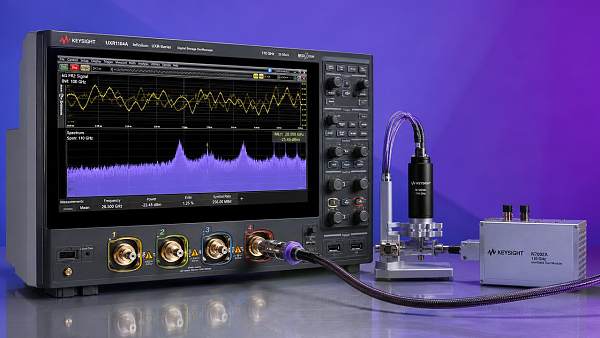
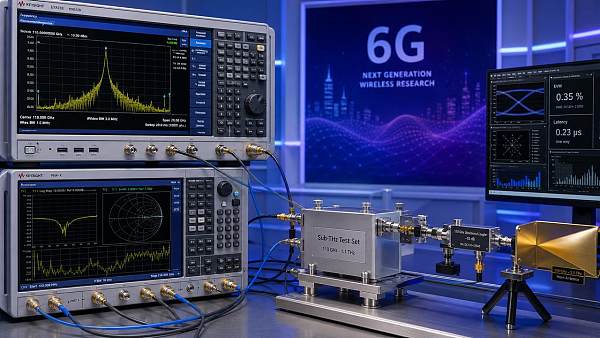
The industry is operating closer to physical limits. GHz testing now supports 5G and 6G research, aerospace electronics, semiconductor validation, automotive radar, and high-speed interconnect development.
In these environments, a result can look stable while still being wrong. A clean trace does not guarantee valid amplitude, timing, phase, or vector accuracy.
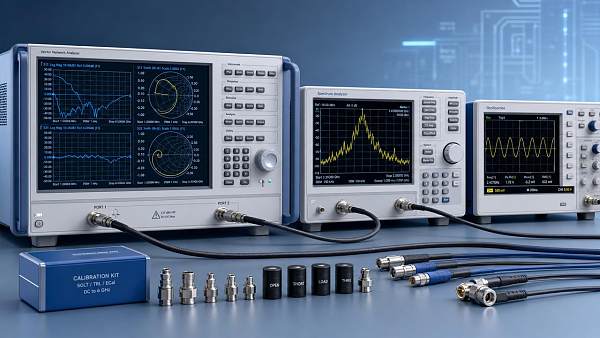
High Frequency Measurement becomes difficult when fixtures, cables, probes, connectors, and environmental variation contribute more uncertainty than the device under test.
This is why more evaluation teams are asking a harder question: at what frequency does instrument confidence begin to degrade for the intended application?
The strongest trend signal: more bandwidth, but narrower confidence margins
Instrument specifications continue to expand upward. Yet usable accuracy often shrinks near the top end of the frequency range, especially under real production or lab conditions.
This gap matters because High Frequency Measurement is judged by uncertainty, not marketing bandwidth. The practical limit is where repeatability, traceability, and correlation begin to weaken.
Three patterns are appearing across technical benchmarking programs:
- Frequency extension is outpacing fixture and interconnect quality.
- Software correction is improving, but cannot fully rescue poor front-end physics.
- Cross-platform correlation is getting harder as modulation complexity increases.
What is driving tighter High Frequency Measurement accuracy limits
The pressure comes from both technology scaling and compliance expectations. Better products demand better measurement discipline.
Where High Frequency Measurement accuracy usually starts to break down
Accuracy loss rarely comes from one obvious failure. It is usually cumulative, and it grows faster at GHz speeds.
Mismatch and impedance discontinuity
Connector wear, poor launch design, and fixture transitions create reflections. Those reflections distort amplitude and phase, reducing confidence in High Frequency Measurement results.
Cable movement and thermal drift
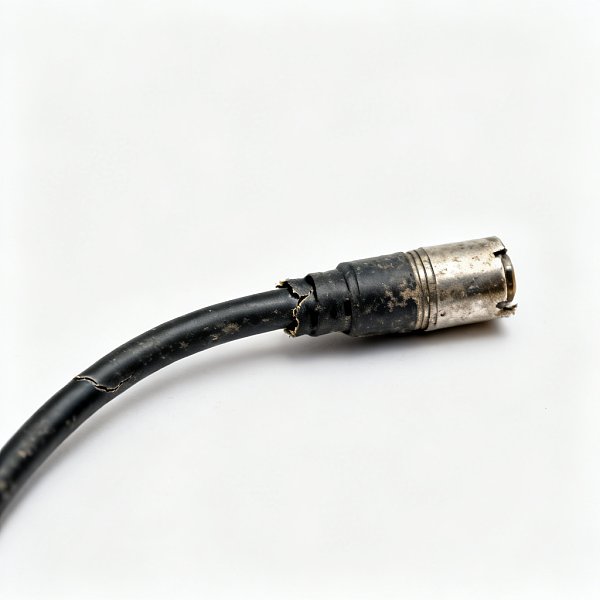
A cable that flexes slightly can change phase enough to affect repeatability. Temperature shifts also alter insertion loss, reference planes, and oscillator stability.
Probe and fixture parasitics
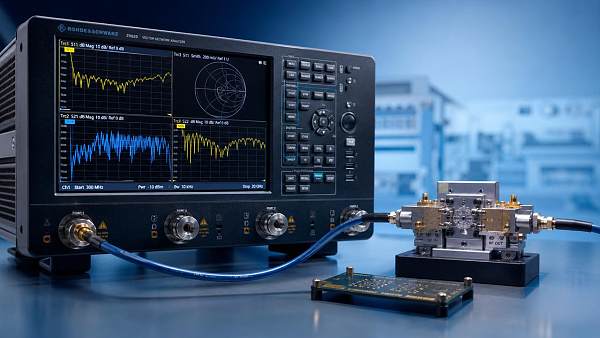
At low frequency, fixture effects may be small. At GHz speeds, inductance and capacitance from pads, vias, and probes can dominate the measured response.
Dynamic range and noise floor limits
Weak signals near the instrument noise floor can appear measurable but carry large uncertainty. Spurious content can also mask true device behavior.
Calibration quality and traceability gaps
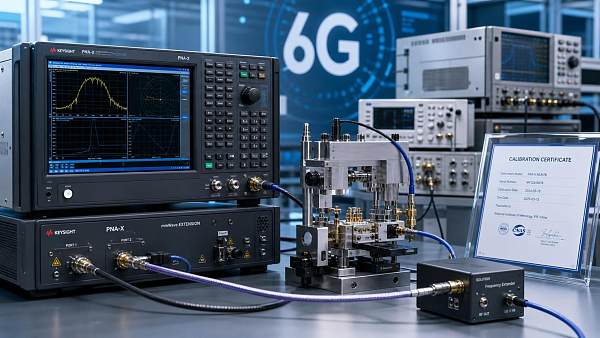
Calibration that is old, incomplete, or poorly matched to the test setup creates silent error. High Frequency Measurement depends on verified standards and disciplined recalibration intervals.
The business impact reaches beyond the RF bench
When High Frequency Measurement accuracy degrades, the consequence is not only technical. It can alter qualification decisions, yield models, failure analysis, and field reliability assumptions.
In semiconductor and electronics programs, false pass or false fail outcomes waste valuable engineering cycles. In aerospace and defense contexts, uncertainty can affect compliance evidence and mission assurance.
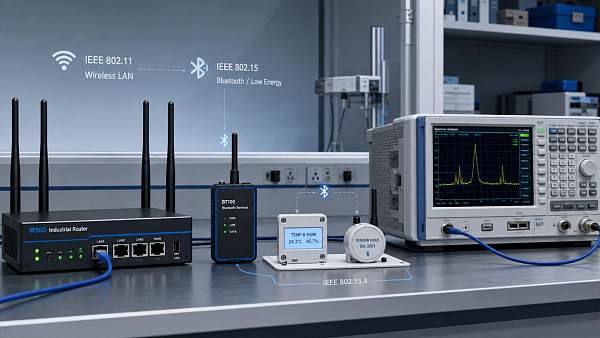
For industrial automation and sensing systems, weak measurement discipline may hide electromagnetic interference risks, timing instability, or signal degradation under environmental stress.
How different operational stages feel the pressure
- R&D validation: harder correlation between simulation, prototype, and bench data.
- Design verification: more retest cycles caused by setup sensitivity.
- Production test: throughput pressure can conflict with calibration discipline.
- Failure analysis: root cause conclusions may shift if reference data lacks traceability.
- Supplier benchmarking: comparison becomes weak when fixtures and methods differ.
These effects show why High Frequency Measurement should be assessed as a system capability, not only as a standalone instrument purchase.
What deserves closer attention when comparing High Frequency Measurement platforms
A reliable evaluation should focus on uncertainty behavior across the intended operating window, not only on top-line specifications.
- Traceable calibration path aligned with ISO/IEC 17025, IEEE, or NIST expectations.
- Published uncertainty data at relevant GHz ranges, not only nominal bandwidth.
- Fixture, probe, and cable ecosystem quality.
- Phase noise, dynamic range, and vector fidelity under realistic signal conditions.
- De-embedding support and verification workflow maturity.
- Thermal stability and warm-up behavior across long test sessions.
- Software transparency for correction algorithms and error budgeting.
A practical decision framework for reducing uncertainty at GHz speeds
The next judgment to make: not whether GHz testing is possible, but whether it is defendable
The direction is clear. More systems will require High Frequency Measurement, and more of them will operate where uncertainty budgets are already tight.
The most durable advantage will come from measurement architectures that combine stable hardware, disciplined calibration, clear error budgeting, and realistic fixture control.
Organizations that treat accuracy limits as a strategic engineering variable will make stronger design decisions and reduce costly rework later in the lifecycle.
Next actions that strengthen High Frequency Measurement confidence
Start with a frequency-specific uncertainty review for the most critical test flows. Map where High Frequency Measurement errors are introduced, corrected, and still left unresolved.
Then benchmark instruments, fixtures, and calibration methods together. The most reliable platform is the one that keeps accuracy defendable at GHz speeds under real operating conditions.
For advanced validation environments, the right next step is not a broader spec sheet. It is a clearer proof chain for High Frequency Measurement accuracy.
Recommended News
 Aug 23, 2026Which IEEE Standards for wireless communication matter most in 6G testingIEEE Standards for wireless communication shape reliable 6G testing. Discover which IEEE frameworks matter most for timing, coexistence, safety, and repeatable lab results.
 Jul 26, 2026How to Evaluate RF High Frequency Test Equipment for 6G Lab AccuracyRF High Frequency Test Equipment evaluation for 6G labs: learn how to assess phase noise, dynamic range, calibration traceability, and repeatability for reliable, decision-grade results.
 Jul 15, 2026High Frequency Test Systems Price: What Drives Total Cost in 2026?High frequency test systems price in 2026 depends on more than the first quote. Discover the real cost drivers, hidden lifecycle expenses, and smart ways to compare suppliers.
![]() Jun 09, 2026Spectrum Analyzers Explained: What Matters Most in Signal TestingSpectrum Analyzers explained for smarter signal testing: learn how frequency range, dynamic range, phase noise, and compliance impact accuracy, speed, and confident buying decisions.
Jun 09, 2026Spectrum Analyzers Explained: What Matters Most in Signal TestingSpectrum Analyzers explained for smarter signal testing: learn how frequency range, dynamic range, phase noise, and compliance impact accuracy, speed, and confident buying decisions. May 21, 20266G Measurement Challenges: Bandwidth, Noise, and Timing in Real Tests6G Measurement faces real-world challenges in bandwidth, noise, and timing. Discover how repeatable testing improves trust, compliance, and performance across advanced R&D and production.
 May 20, 2026High Frequency Measurement: 2026 Selection GuideHigh Frequency Measurement selection in 2026 starts with the right criteria. Learn how to compare accuracy, calibration, workflow, cost, and support to choose with confidence.
 May 14, 20266G Measurement Challenges: Choosing the Right Oscilloscope Features6G Measurement challenges demand more than bandwidth alone. Discover the oscilloscope features that improve signal fidelity, timing accuracy, and analysis confidence for smarter test decisions.
 May 13, 2026High Frequency Measurement: Accuracy Limits at GHz SpeedsHigh Frequency Measurement at GHz speeds demands more than bandwidth. Learn where accuracy breaks down, how to reduce uncertainty, and what to evaluate for reliable, traceable results.
 May 03, 2026IEEE Standards for Wireless Communication Explained SimplyIEEE Standards for wireless communication explained simply—learn how Wi-Fi, Bluetooth, and industrial wireless standards impact compatibility, performance, and smarter technology choices.
 May 02, 20266G Measurement Basics: What Actually Matters in Early Testing6G Measurement explained clearly: learn which early-test factors really matter—frequency stability, signal integrity, latency behavior, and repeatability—to compare claims with confidence.
 Apr 24, 2026Electrical Test Repeatability Drops Fast When Cables AgeElectrical Test repeatability drops as cables age. Learn how Industrial Sensors, Spectrum Analyzers, IEEE Standards and NIST Standards help reduce drift and protect data confidence.