Why Spectrum Analyzers Miss Intermittent RF Problems
Time
Click Count
Intermittent RF faults are difficult to capture because many conventional spectrum analyzers do not continuously observe the signal in a way that preserves short, low-duty-cycle, or unpredictable events. For operators and technical researchers, the practical takeaway is simple: if an RF issue appears only occasionally, a standard swept measurement workflow may show a clean result even when a real failure exists. That gap can lead to false confidence, repeated troubleshooting cycles, and unnecessary downtime. To improve diagnostic accuracy, teams need to understand where the analyzer’s visibility breaks down, what measurement modes reduce that risk, and how calibration discipline under NIST-traceable practices supports trustworthy decisions.
Why intermittent RF problems slip past a traditional spectrum analyzer
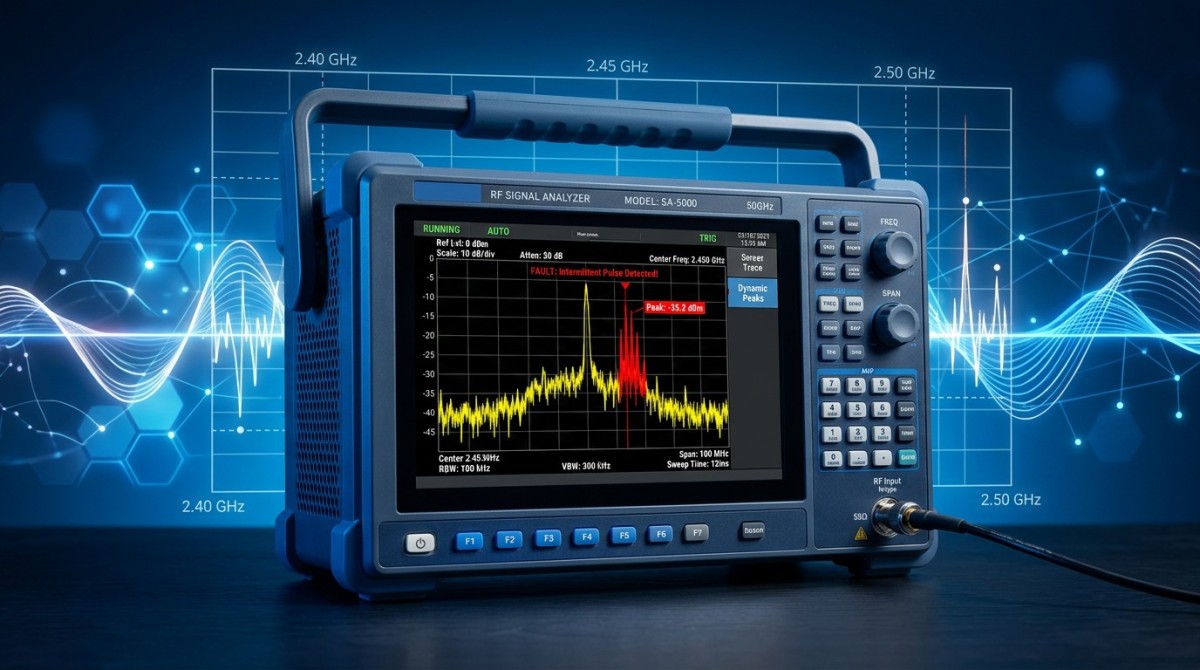
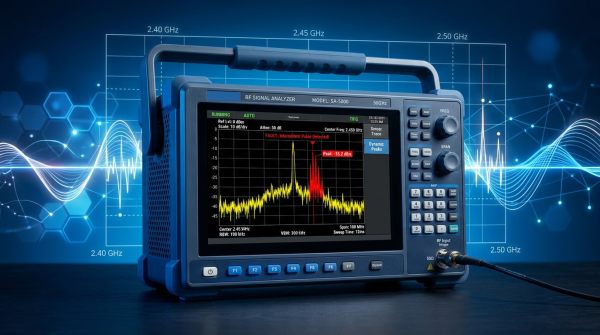
The core issue is not that a spectrum analyzer is useless for RF testing. It is that many intermittent RF events do not behave in a way that matches how a conventional swept analyzer collects data. A swept spectrum analyzer measures frequency over time by scanning across a span. If a burst, glitch, transient, spurious emission, or short interference event happens when the analyzer is looking somewhere else, that event may never be displayed.
This creates a blind spot in several common situations:
- Low-duty-cycle transmissions: signals that appear briefly and infrequently
- Random transients: emissions triggered by unstable components, switching noise, or environmental conditions
- Frequency-hopping or agile systems: where the signal moves faster than the sweep can represent
- Buried events near the noise floor: where averaging or detector choices hide short anomalies
- Intermittent EMC-related issues: emissions caused by load changes, cable movement, grounding shifts, or thermal drift
In practice, engineers often see the symptom elsewhere first: packet loss, failed wireless links, sporadic compliance failures, unexplained resets, or customer complaints that cannot be reproduced during bench testing. The analyzer may report normal-looking traces because it is capturing an average or incomplete view rather than the event itself.
What operators and researchers are actually trying to determine
When readers search for why spectrum analyzers miss intermittent RF problems, they usually are not looking for a textbook definition. They want to answer operational questions that affect diagnosis, equipment selection, and test confidence:
- Is the analyzer missing the fault, or is the fault not present during the test?
- What kinds of intermittent RF events are most likely to be invisible in a swept measurement?
- Which instrument features improve the chance of capturing short-duration events?
- How should measurement settings be changed before escalating to a new instrument purchase?
- What role do calibration quality and NIST-traceable practices play in reliable RF troubleshooting?
For technical researchers, the deeper concern is evaluation: whether a given category of Electrical Test equipment is suitable for modern RF environments with bursty, dynamic, and time-varying behavior. For operators, the concern is more immediate: how to stop missing the fault and reduce repeat troubleshooting.
The most common technical reasons these problems are missed
Several measurement limitations explain most missed intermittent events.
1. Sweep time is too slow for the event
A classic swept analyzer does not view the full frequency span at once. It scans through it. If the event occurs outside the analyzer’s instantaneous observation window, it is lost. The wider the span and the narrower the resolution bandwidth, the longer the sweep often becomes.
2. Probability of intercept is low
Intermittent events are governed by timing probability. Even if an event repeats, the analyzer must be observing the right frequency at the right moment. For very short bursts, the probability of intercept may be poor unless the instrument is using real-time acquisition or a zero-span style time-domain approach.
3. Detector and trace settings can hide short events
Operators sometimes rely on averaging for a cleaner display. While useful for stable signals, averaging can suppress brief peaks. Similarly, detector choice matters. Depending on settings, narrow or fast transients may not stand out clearly.
4. Span choices are too broad for fault capture
A broad span is helpful for searching, but it reduces temporal visibility in many workflows. If a user is looking for a rare event across a large frequency range, the instrument may trade event visibility for coverage.
5. Triggering is not aligned with the failure mechanism
Without proper triggering, the analyzer simply collects what happens during routine acquisition. Intermittent RF faults often need power-based, frequency-mask, external, or time-qualified triggering tied to the system state.
6. Dynamic range and noise floor limitations obscure weak intermittent signals
Some faults are brief and weak rather than brief and strong. In those cases, front-end overload, poor preselection strategy, or insufficient sensitivity can make the event appear nonexistent.
How to tell whether the problem is the signal or the measurement method
A useful troubleshooting approach is to separate signal behavior from instrument behavior. If a suspected RF issue is intermittent, ask the following:
- Does the issue correlate with a system event? For example, switching regulators, motor starts, thermal transitions, software state changes, or antenna movement.
- Can the span be narrowed? If yes, shorter sweep times may increase visibility.
- Have max hold and persistence been used correctly? These can help reveal recurring bursts, though they still do not guarantee full capture.
- Can zero-span mode be used at the suspected frequency? This is often effective when timing matters more than broad spectral search.
- Is external triggering available? Triggering from the DUT or a correlated digital event can dramatically improve capture success.
- Has the test setup been verified for repeatability? Loose cables, poor shielding, unstable grounding, or inconsistent attenuation can mimic intermittent RF behavior.
If changing settings materially alters whether the problem appears, the measurement method is likely part of the issue. That is a strong signal that the original spectrum analyzer workflow was not sufficient for the fault mode under investigation.
Which analyzer capabilities matter most when intermittent signals are involved
Not every team needs to replace existing equipment. But when evaluating RF test instruments for intermittent fault detection, several capabilities deserve priority.
Real-time spectrum analysis
Real-time architectures can observe a block of spectrum continuously within a defined bandwidth, greatly improving the probability of capturing short events. For bursty or random problems, this is often the most meaningful improvement over basic swept methods.
Fast DPX or persistence-style event visualization
Event-density displays help engineers see infrequent signals that would be hard to notice on a normal trace. This is especially useful for coexistence issues, sporadic spurs, and short-duration interference.
Advanced triggering options
Frequency-mask triggers, power triggers, time-qualified triggers, and external triggers can convert a random search into a targeted capture strategy.
High probability of intercept
For intermittent RF troubleshooting, this specification is more relevant than many buyers initially realize. It directly affects whether the instrument can catch very short events in the first place.
Time-correlated analysis
Being able to correlate RF behavior with baseband, power rail, environmental, or control signals can reveal the root cause faster than isolated spectrum viewing.
NIST-traceable calibration support
When findings affect product quality, compliance decisions, or procurement, confidence in amplitude and frequency accuracy matters. NIST-traceable calibration does not solve intermittent capture by itself, but it ensures that once an event is seen, the measurement is credible and comparable across labs and maintenance cycles.
Practical workflow changes that improve capture without overcomplicating testing
For many operators, better results come from better setup discipline before investing in a higher-end platform.
- Start with the narrowest realistic span around the suspected fault frequency.
- Use max hold and persistence to expose repeating rare events.
- Switch to zero-span when event timing is more important than searching multiple frequencies.
- Use external triggers from DUT activity whenever possible.
- Document analyzer settings with the failure evidence so later teams can reproduce the method.
- Verify calibration status and accessory integrity including cables, attenuators, probes, and connectors.
- Test under real operating conditions such as thermal load, production duty cycle, or field-like EMI exposure.
These steps help avoid a common mistake: assuming a clean trace means a clean system. In intermittent RF work, absence of evidence is often just absence of visibility.
Why this matters for equipment evaluation and procurement decisions
For B2B decision-makers and technical researchers, the key lesson is that instrument selection should match the fault model, not just the frequency range on the datasheet. If production systems, wireless modules, radar subsystems, power electronics, aerospace electronics, or semiconductor test environments can generate bursty or transient RF behavior, then relying only on a conventional swept spectrum analyzer may leave critical failure modes undetected.
That affects several business outcomes:
- Longer root-cause analysis cycles
- Repeated no-fault-found service events
- Higher downtime and engineering labor cost
- Inconsistent validation between labs or suppliers
- Weaker confidence in compliance and release decisions
The most valuable evaluation question is not “Does this analyzer cover my frequency band?” but “Can this analyzer reliably capture the type of RF event my operation is most likely to miss?”
Conclusion
Spectrum analyzers miss intermittent RF problems mainly because many faults happen too briefly, too rarely, or too unpredictably for a conventional swept measurement to capture them. For operators, that means troubleshooting methods must be adapted with narrower spans, better triggering, persistence tools, and time-domain checks. For researchers and evaluators, it means instrument capability should be judged by event capture performance, not by headline frequency coverage alone. When those practices are combined with disciplined, NIST-traceable calibration, teams gain a more reliable view of real RF behavior and make better technical and procurement decisions.
Recommended News
 Apr 24, 2026Why Spectrum Analyzers Miss Intermittent RF ProblemsSpectrum Analyzers for RF testing can miss intermittent faults. Learn how Electrical Test equipment, NIST Standards for calibration, and smarter capture methods improve RF troubleshooting.
 Apr 24, 2026Electrical Test Errors That Come From Fixture DesignElectrical Test errors often start in fixture design. Learn how Spectrum Analyzers, Industrial Sensors, IEEE Standards, and NIST Standards help improve accuracy, repeatability, and production confidence.