Industrial Inspection Investment Insights 2026
Time
Click Count
Industrial inspection investment insights are becoming central to capital planning in 2026. Inspection budgets now influence production stability, compliance exposure, and the financial quality of growth.
Across complex industries, measurement and sensing systems are no longer support tools. They shape yield, reduce escape risk, and strengthen evidence for audits, customer claims, and process improvement.
For organizations comparing inspection technologies, the strongest investment case comes from connecting metrology performance to business outcomes. That is the core of practical industrial inspection investment insights.
Industrial Inspection Investment Insights: Core Definition and Scope
Industrial inspection investment insights refer to decision frameworks used to evaluate inspection spending beyond equipment price. They include accuracy, throughput, traceability, software interoperability, and lifecycle support.
In 2026, inspection investment often covers five linked domains. These are dimensional metrology, optical sensing, electrical testing, machine vision inspection, and environmental or process-condition monitoring.
A useful investment review asks four questions. What risk is being reduced, what process is being stabilized, what data is being captured, and what return can be defended financially?
This approach matters because many failures begin as invisible deviations. Surface defects, frequency drift, thermal variation, contamination, and alignment errors all become expensive when detected too late.
Main investment components
- Hardware capability, including resolution, repeatability, and inspection speed
- Software analytics, AI support, and data export readiness
- Calibration, maintenance, and regulatory documentation
- Operator workflow, training needs, and integration effort
- Risk reduction value across production and supplier quality
2026 Market Context and Current Investment Signals
The current market rewards inspection systems that convert measurement into immediate process action. That shift explains why industrial inspection investment insights now influence both operating expenditure and capital approval.
Several pressures are driving this trend. Tolerances are tighter, products are more electronic, warranty expectations are higher, and global audits demand stronger traceability across suppliers and sites.
The best industrial inspection investment insights in this environment focus on resilience. Systems must deliver technical precision, but also stable uptime, standardized reports, and broad interoperability.
Where Inspection Investments Create Measurable Business Value
Inspection value is strongest when linked to cost-of-poor-quality reduction. A high-spec system looks expensive until defect escape, field failure, and line stoppage costs are calculated honestly.
1. Yield protection
Metrology and machine vision can catch drift before final assembly. That lowers scrap, stabilizes Cp and Cpk, and supports process correction while material value is still low.
2. Compliance and audit readiness
Systems aligned with ISO/IEC 17025, NIST traceability, or relevant industry protocols build stronger evidence chains. This reduces documentation gaps during certification and customer review cycles.
3. Faster root-cause analysis
High-quality inspection data shortens investigations. Better resolution, timestamping, and correlation across tools help isolate failure modes faster than subjective manual checks.
4. Better capital efficiency
Industrial inspection investment insights often reveal that one versatile platform can replace several fragmented tools. Consolidation reduces maintenance complexity and improves data consistency.
5. Supplier quality control
Inspection investment is not limited to internal production. It strengthens incoming material validation, supplier scorecards, and dispute resolution with objective, repeatable evidence.
Priority Technology Areas for 2026 Allocation
Not all inspection categories offer the same return profile. The most attractive investment zones combine broad applicability, strong data value, and direct impact on production risk.
These categories align closely with the strongest industrial inspection investment insights because they support both prevention and verification. That dual role improves the payback argument.
Typical Scenarios Across a Comprehensive Industrial Base
A cross-industry view helps clarify where inspection budgets should concentrate. Different sectors face different defect mechanisms, yet the investment logic remains comparable.
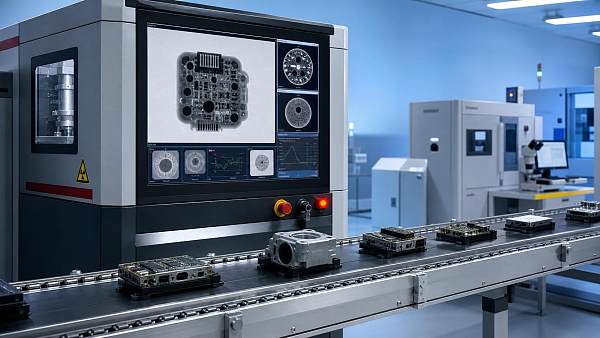
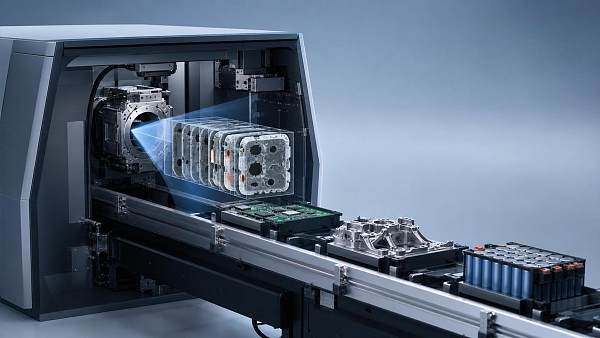
- Electronics assembly: AOI, X-Y dimensional checks, solder inspection, signal validation
- Automotive components: geometric control, surface inspection, torque and electrical consistency
- Aerospace structures: precision metrology, composite integrity, traceable documentation
- Energy systems: insulation checks, leak detection, thermal and vibration monitoring
- Medical and laboratory devices: micro-dimension accuracy, cleanliness, regulatory evidence
- General industrial equipment: incoming inspection, alignment, wear detection, process monitoring
In every scenario, industrial inspection investment insights improve when the chosen system links directly to a narrow set of business-critical failure modes.
Evaluation Criteria for Stronger Investment Decisions
A credible business case needs more than a specification sheet. The investment review should compare total value, not only upfront cost.
Key criteria to score
- Measurement capability against real tolerance and defect thresholds
- Cycle time fit for inline, at-line, or laboratory use
- Calibration burden and service response availability
- Data integration with MES, SPC, QMS, and analytics platforms
- Software usability, training effort, and error-proofing features
- Vendor roadmap, spare parts continuity, and upgrade path
This is where many industrial inspection investment insights become decisive. The most advanced instrument may not be the best option if utilization stays low or integration fails.
Implementation Risks and Practical Safeguards
Inspection investments underperform when scope definition is weak. Buying for maximum specification without a stable use case often leads to slow adoption and unclear return.
Another common risk is isolated data. If inspection results cannot feed corrective action, reporting, or supplier management, the organization gains information but not control.
- Start with the highest-cost defect family or compliance gap
- Define acceptance criteria before system selection
- Validate repeatability using representative samples
- Model total cost over calibration and support cycles
- Assign ownership for data review and process response
Practical industrial inspection investment insights always include governance. Technology performs best when matched with disciplined operating rules and measurable response procedures.
Next-Step Framework for 2026 Planning
A structured next step can turn broad interest into defendable action. Begin by ranking inspection gaps according to defect cost, audit pressure, and process instability.
Then map each gap to the most relevant sensing or measurement technology. Compare candidate systems using traceability, throughput, interoperability, and lifecycle burden.
Finally, build a phased investment plan. Pilot high-impact applications first, document gains, and use evidence from the pilot to support broader deployment.
In 2026, the most effective industrial inspection investment insights are practical, data-backed, and operationally grounded. They turn inspection from a cost center into a measurable control system for quality, compliance, and ROI.
Recommended News
 Sep 11, 2026How EV battery tech affects thermal runaway detection in productionEV battery tech is reshaping thermal runaway detection in production. Explore layered testing, early warning signals, and smarter quality controls for safer battery manufacturing.
 Sep 07, 2026What should buyers verify before choosing Aerospace Inspection Systems Europe?Aerospace Inspection Systems Europe: verify traceability, uncertainty, automation, data integrity, and local support before selecting a production-ready solution.
 Aug 11, 2026What Drives Semiconductor Inspection Equipment Price in Fab Planning?Semiconductor inspection equipment price depends on sensitivity, throughput, automation, software, and service. Learn the real fab cost drivers before you compare suppliers.
 Aug 09, 2026How Machine Learning Improves Defect Detection Accuracy in X-ray InspectionMachine learning boosts X-ray inspection accuracy by reducing false calls, detecting subtle defects, and improving trust in real production conditions. Learn what drives reliable results.
 Jul 25, 2026How to Evaluate Portable NDT Equipment for Field InspectionsPortable NDT equipment buying guide for field inspections: learn how to assess detection accuracy, portability, durability, compliance, and reporting to choose equipment that performs reliably on site.
 Jul 04, 2026Inline X Ray CT Inspection: Key Limits in Void and Crack DetectionInline X Ray CT inspection reveals the real limits of void and crack detection—learn how speed, resolution, and part geometry affect confidence, quality decisions, and production results.
 Jun 22, 2026High-Precision Medical Diagnostic Equipment Selection GuideMedical diagnostic equipment high precision selection guide: compare accuracy, compliance, workflow fit, IT integration, and lifetime cost to choose reliable systems with confidence.
 Jun 03, 2026Building Materials Testing: Common Risks Hidden in SpecsBuilding materials testing can reveal hidden spec risks before they cause delays, failures, or disputes. Learn how to verify performance, safety, and compliance.
 May 19, 2026Industrial Inspection Investment Insights 2026Industrial inspection investment insights for 2026: discover how smarter inspection spending improves yield, compliance, traceability, and ROI across complex industrial operations.