7 Hyperspectral Imaging Applications Worth Tracking in 2026
Time
Click Count
Hyperspectral Imaging applications are moving from research environments into practical industrial systems. In 2026, they matter because they combine imaging with spectral data, turning inspection into measurable intelligence.
Across manufacturing, food systems, healthcare, resource mapping, and defense sensing, Hyperspectral Imaging applications support better detection, classification, and anomaly discovery. That makes them highly relevant for quality, traceability, and high-precision decision workflows.
What makes Hyperspectral Imaging applications different from conventional vision systems?
Standard cameras capture shape, color, and contrast. Hyperspectral systems collect dozens or hundreds of narrow spectral bands per pixel. This reveals chemical and material signatures invisible to RGB inspection.
That difference explains why Hyperspectral Imaging applications are expanding. They do not just show where a defect is. They help explain what the defect is made of.
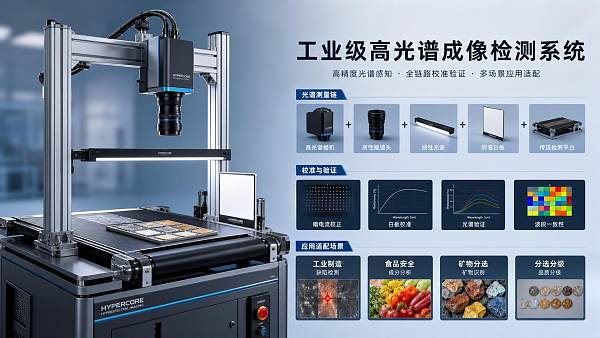
In industrial practice, this supports non-contact inspection, contamination screening, coating evaluation, and composition analysis. The value grows when visual similarity hides material differences that affect performance or safety.
For organizations focused on zero-defect production, hyperspectral data can connect optics, metrology, and AI classification. This creates a stronger path from measurement to intelligent action.
Why does this matter in 2026?
- Higher quality targets demand earlier defect discovery.
- More products use advanced composites and layered materials.
- AI models now improve spectral classification speed.
- Regulatory pressure is increasing around traceability and safety.
Which 7 Hyperspectral Imaging applications are worth tracking in 2026?
The strongest Hyperspectral Imaging applications share one trait. They solve inspection problems where surface appearance alone is not enough.
1. Semiconductor and electronics inspection
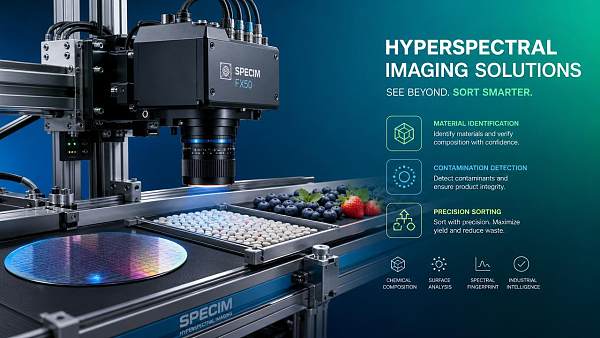
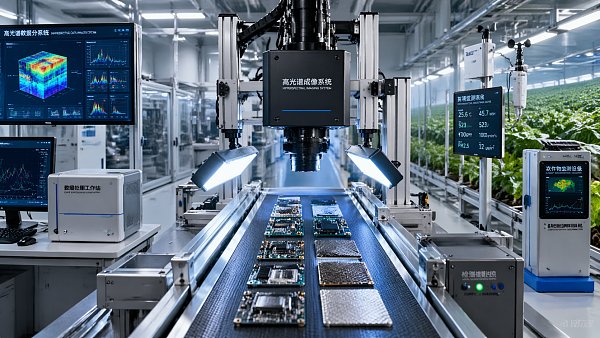
Spectral imaging can identify coating variation, contamination, bonding residue, and subtle material inconsistencies. These issues often escape standard machine vision until yield loss becomes expensive.
2. Food quality and foreign matter detection
Food processing uses Hyperspectral Imaging applications to separate bruised produce, detect adulteration, classify freshness, and identify contaminants. It is especially useful where visual grading lacks chemical sensitivity.
3. Pharmaceutical tablet and powder analysis
Uniformity, moisture content, blend distribution, and coating consistency are major quality concerns. Hyperspectral systems help assess these properties without destroying samples.
4. Medical diagnostics and tissue differentiation
Clinical researchers are exploring tissue classification, wound evaluation, perfusion mapping, and surgical guidance. In 2026, progress depends on validation, workflow fit, and regulatory acceptance.
5. Agriculture and crop stress monitoring
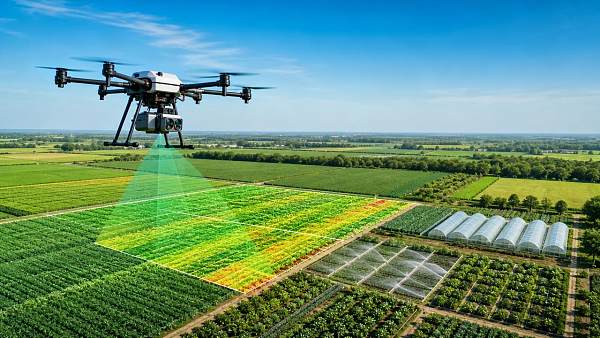
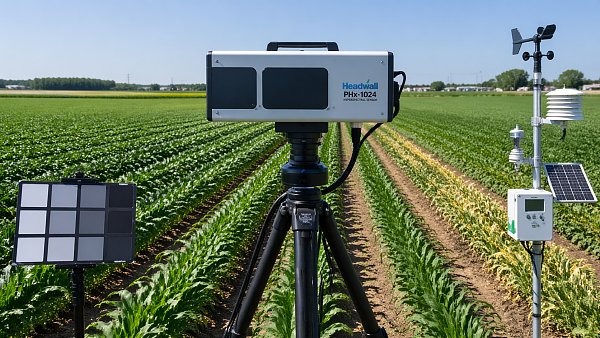
Hyperspectral Imaging applications can reveal water stress, disease onset, nutrient imbalance, and maturity variation. This supports precision agriculture and better field-level intervention timing.
6. Mining, geology, and material sorting
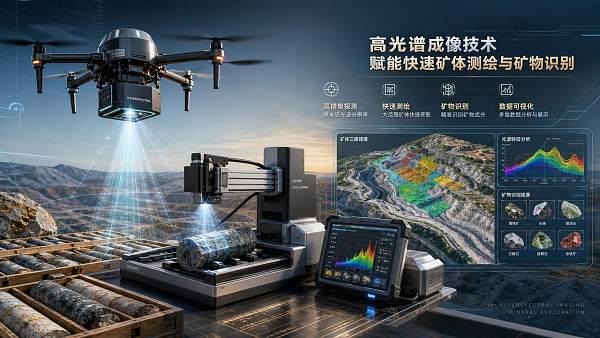
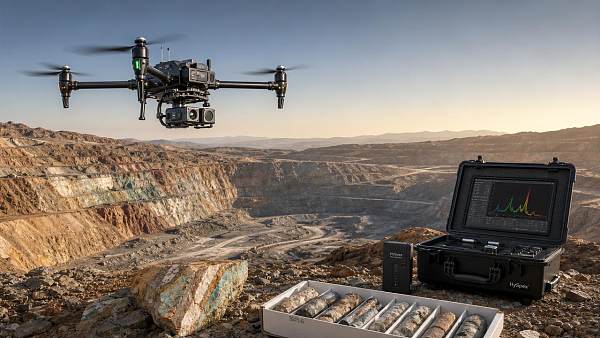
Ore characterization and mineral mapping benefit from spectral identification. The same principle supports recycling lines that sort plastics, metals, and composite waste streams more accurately.
7. Defense, aerospace, and remote surveillance
Camouflage detection, terrain analysis, thermal-event correlation, and target discrimination remain high-value areas. Aerospace inspection also uses spectral imaging for coatings and composite integrity review.
How should teams decide whether Hyperspectral Imaging applications fit a real process?
Not every inspection problem needs hyperspectral sensing. The best use cases involve material differences, chemical signatures, or multi-layer conditions that conventional cameras cannot isolate reliably.
A practical evaluation should start with the defect physics. Ask whether failures are driven by composition, moisture, residue, oxidation, coating thickness, or contamination type.
If the answer is yes, Hyperspectral Imaging applications may provide clear value. If defects are purely geometric, 3D scanning or high-resolution machine vision may be more efficient.
Key fit criteria
- The target has unique spectral behavior.
- False rejects or escapes are currently costly.
- Non-contact measurement is preferred.
- There is enough sample data for calibration.
- The process can support lighting and motion control.
What are the main implementation challenges and common misconceptions?
One misconception is that more spectral bands always mean better outcomes. In reality, useful performance depends on wavelength relevance, signal quality, calibration stability, and algorithm design.
Another mistake is ignoring environmental control. Lighting geometry, conveyor speed, vibration, and temperature drift can reduce classification reliability if they are not managed carefully.
Data burden is also significant. Hyperspectral Imaging applications generate large datasets, so storage, labeling, model maintenance, and integration with manufacturing execution systems require planning.
Cost evaluation should include optics, illumination, compute hardware, software, calibration tools, and validation effort. The camera alone rarely defines total project cost.
Common risks
- Selecting wavelengths without sample-driven testing.
- Using laboratory models in unstable factory conditions.
- Underestimating calibration and recertification needs.
- Expecting AI to fix poor optical setup.
How do Hyperspectral Imaging applications compare with multispectral and conventional machine vision?
Conventional vision is faster and simpler for shape, presence, alignment, and visible defects. Multispectral imaging adds a few selected bands. Hyperspectral imaging provides a much richer spectral signature.
The tradeoff is complexity. More data can improve material discrimination, but it also increases system tuning, processing requirements, and validation work.
What should be checked before scaling Hyperspectral Imaging applications in 2026?
Before scaling, confirm that the pilot achieved repeatable detection under realistic production conditions. Laboratory success is useful, but deployment requires stable throughput and controlled false-alarm behavior.
Validation should cover sample diversity, seasonal variation, supplier changes, and aging effects. This is especially important in food, agriculture, and pharmaceutical workflows.
A structured rollout plan reduces risk. It should define calibration intervals, data governance, retraining triggers, operator response logic, and performance review metrics.
The most promising Hyperspectral Imaging applications in 2026 are not simply impressive demos. They are measurable systems tied to defect prevention, process control, and faster technical decisions.
The seven areas worth tracking are semiconductor inspection, food safety, pharmaceutical analysis, medical diagnostics, agriculture, mining and sorting, plus defense and aerospace sensing.
The next step is practical evaluation. Start with a defect map, gather representative samples, compare against multispectral and conventional vision, and validate performance under real operating conditions.
When deployed with strong calibration, optical discipline, and actionable workflows, Hyperspectral Imaging applications can become a core sensing layer in advanced industrial intelligence.
Recommended News
 Aug 04, 2026How to Evaluate a Hyperspectral Imaging Manufacturer for Calibration and Application FitHyperspectral imaging manufacturer selection starts with calibration integrity, spectral stability, software maturity, and real application fit. Learn what to verify before you buy.
 May 21, 2026Hyperspectral Imaging for Agriculture: Where It Improves Crop DecisionsHyperspectral Imaging for agriculture helps farmers detect stress earlier, optimize inputs, improve crop quality, and make faster, lower-risk field decisions.
 May 21, 20267 Hyperspectral Imaging Applications Worth Tracking in 2026Hyperspectral Imaging applications are reshaping 2026 industries—from semiconductors and food safety to healthcare and defense. Explore 7 high-impact use cases driving smarter inspection and decisions.
 May 21, 2026Hyperspectral Imaging for Mineral Exploration: Faster Ore Mapping or Hype?Hyperspectral Imaging for mineral exploration: discover when it delivers faster ore mapping, clearer alteration targets, and stronger drilling decisions—and when the hype outweighs the evidence.
 May 13, 2026Hyperspectral Imaging for Mineral Exploration in Low-Contrast ZonesHyperspectral Imaging for mineral exploration helps detect subtle ore signatures in low-contrast zones, improving target ranking, reducing risk, and guiding smarter exploration decisions.
 May 03, 2026Hyperspectral Imaging for Mineral Exploration in Early-Stage SurveysHyperspectral Imaging for mineral exploration helps teams rank targets faster, reduce survey risk, and improve early-stage decisions with practical checklists for platform choice, validation, and budget control.
 Apr 24, 2026Hyperspectral Imaging Applications That Moved Beyond LabsHyperspectral Imaging applications now power agriculture, automated vision inspection systems, and 3D Scanning for quality control—see how calibrated, practical solutions improve accuracy and speed.
 Apr 24, 2026What Hyperspectral Imaging Reveals Before Crop Stress ShowsHyperspectral Imaging for agriculture reveals crop stress before visible damage appears, helping teams act earlier with smarter Environmental Monitoring sensors and advanced metrology solutions.
 Apr 24, 2026Hyperspectral Imaging in 2026: Faster Capture, Harder DecisionsHyperspectral Imaging in 2026: compare 3D Scanning, Spectrum Analyzers, Electrical Test, and Industrial Sensors with IEEE Standards and NIST Standards for smarter buying decisions.
 Apr 24, 2026Why Hyperspectral Imaging Misses Defects RGB Cameras CatchHyperspectral Imaging vs RGB: learn why visible defects escape spectral systems on fast lines, and how Industrial Sensors, IEEE Standards, and NIST Standards guide smarter inspection choices.