When Benchmarking Services Improve Supplier Decisions
Time
Click Count
When Benchmarking Services Improve Supplier Decisions
For business evaluators facing complex supplier choices, benchmarking services create a practical path from claims to proof.
That matters even more in precision-led sectors.
A supplier may promise speed, accuracy, uptime, and compliance.
Without structured comparison, those promises are hard to verify.
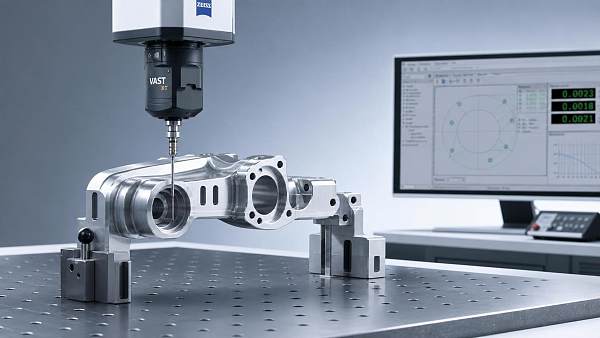
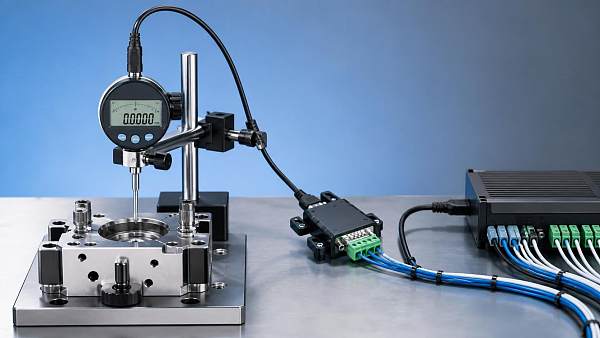
Benchmarking services help teams compare metrology, sensing, and inspection performance against recognized standards and real operating needs.
The result is a better supplier decision, lower risk, and stronger long-term value.
Why supplier decisions fail without structured comparison
Many supplier reviews still depend on sales presentations, sample reports, and short demos.
That approach often hides gaps between advertised capability and production reality.
In actual business settings, small performance differences can create large downstream costs.
A vision inspection system may pass a demo, yet struggle with reflective materials.
A high-frequency measurement platform may look advanced, yet require difficult calibration routines.
A 3D scanning solution may offer fine resolution, yet miss throughput targets.
This is where benchmarking services become useful.
They replace isolated impressions with measurable evidence.
They also let decision teams compare suppliers on the same basis.
What often gets overlooked
- Measurement repeatability under real production conditions
- Operator skill dependence and training burden
- Compatibility with current data and quality workflows
- Regulatory traceability linked to ISO, IEEE, or NIST expectations
- Service response time and calibration support after purchase
Benchmarking services expose these hidden variables before contract signing.
How benchmarking services sharpen supplier evaluation
Good benchmarking services do more than rank vendors.
They connect technical evidence to procurement decisions.
That means comparing systems using common metrics, controlled test methods, and business-relevant thresholds.
For example, G-IMS evaluates advanced metrology, industrial optics, electrical test, vision inspection, and specialized sensors through a technical benchmarking lens.
Its focus is not generic product scoring.
It is about decision-grade comparison for high-stakes environments.
Key evaluation dimensions
- Performance accuracy against defined tolerances
- Repeatability across operating cycles and environments
- Compliance with ISO/IEC 17025, IEEE, and NIST-linked methods
- Integration with software, reporting, and traceability systems
- Lifecycle cost, maintenance needs, and upgrade flexibility
This also means supplier decisions improve because the discussion shifts from price alone to verified value.
Where benchmarking services add the most value
Not every purchase needs deep benchmarking.
But several situations make benchmarking services especially valuable.
1. Multi-supplier technical shortlists
When three to five suppliers appear similar, benchmarking services reveal meaningful technical separation.
This reduces the chance of choosing based on presentation quality rather than proven capability.
2. High-cost systems with long replacement cycles
For CMM platforms, photonic sensors, or spectrum analyzers, a weak choice can stay costly for years.
Benchmarking services protect capital decisions by testing durability, support quality, and future-fit performance.
3. Regulated or zero-defect production environments
In aerospace, semiconductors, and precision manufacturing, poor measurement confidence creates compliance and yield risks.
Benchmarking services help verify whether a supplier can support traceable, stable, repeatable operations.
4. Upgrade decisions during technology transitions
Recent market shifts make this even more important.
Teams are moving toward AI-enabled inspection, non-contact sensing, and data-centric quality control.
Benchmarking services help separate useful innovation from expensive noise.
A practical framework for comparing suppliers
A solid decision process needs structure.
Benchmarking services work best when teams define the decision model early.
This framework keeps benchmarking services aligned with business outcomes, not just lab results.
Simple questions that improve comparison quality
- Which performance metric affects cost or quality the most?
- Which test condition reflects real production stress?
- Which standards must the supplier satisfy from day one?
- Which capability is nice to have, but not decision-critical?
How G-IMS supports better benchmarking services
G-IMS is built for technical buyer confidence.
Its institutional focus covers five industrial pillars with strong relevance to modern manufacturing and R&D decisions.
That includes advanced metrology and 3D scanning, industrial optics and photonic sensors, electrical test and high-frequency measurement, non-contact vision inspection systems, and environmental monitoring.
More importantly, G-IMS connects hardware performance to actionable intelligence.
This helps decision teams move beyond brochures and compare systems through a regulatory and operational lens.
For supplier selection, that is a major advantage.
Benchmarking services become more credible when they are tied to ISO/IEC 17025, IEEE, and NIST-aligned expectations.
They also become more useful when technical findings are translated into sourcing implications.
Common mistakes when using benchmarking services
Even strong benchmarking services can be used poorly.
A few mistakes show up again and again.
- Comparing headline specs without reviewing test conditions
- Ignoring service, calibration, and support capability
- Treating compliance claims as equal without evidence
- Overweighting purchase price and underweighting lifecycle cost
- Using generic scorecards for specialized technical applications
The better approach is to keep benchmarking services tied to actual use cases, failure risks, and production priorities.
Turning benchmarking into a confident supplier decision
At the end of the process, the goal is not a prettier comparison sheet.
The goal is a supplier decision that stands up under pressure.
Benchmarking services improve that outcome by showing which supplier can meet required precision, support stable operations, and scale with future needs.
That is especially important when the purchase affects yield, compliance, innovation speed, or customer trust.
In practical terms, the best next step is clear.
Define your decision criteria first.
Then use benchmarking services to test each shortlisted supplier against those criteria.
When evidence is structured, supplier selection becomes faster, safer, and easier to defend.
That is when benchmarking services stop being a research exercise and start becoming a real decision advantage.
Recommended News
 Sep 17, 2026How to select inline measurement systems for Middle East heatInline Measurement Systems Middle East: learn how to select reliable solutions for heat, dust, vibration, calibration, and production-ready data integration.
 Sep 16, 2026How to choose monitor stands that reduce neck strain at workMonitor stands can reduce neck strain by improving screen height, distance, and stability. Explore practical tips to choose the right ergonomic stand for a more comfortable workspace.
 Sep 15, 2026How to verify an importers directory for machinery before contacting suppliersImporters directory for machinery verification guide: assess legal status, technical fit, compliance, and service capability to build a reliable supplier shortlist.
 Sep 13, 2026How to assess calibration support from metrology suppliers in the Middle EastMetrology suppliers Middle East: learn how to assess ISO/IEC 17025 scope, calibration uncertainty, local support, turnaround time, and lifecycle cost.
 Sep 12, 2026How material fatigue causes cracks in safety-critical componentsMaterial fatigue can trigger hidden cracks in safety-critical components long before visible failure. Learn how cyclic loading, stress concentrations, inspection methods, and targeted controls reduce risk.
 Sep 10, 2026What to verify before choosing an optical micrometer supplier for wireChoose an optical micrometer supplier for wire with confidence. Verify real-line accuracy, calibration, integration, and support before you buy.
 Sep 08, 2026How to choose thickness gauges for pipes with limited accessThickness Gauges for pipes: learn how to select the right ultrasonic gauge and probe for tight access, curved surfaces, corrosion, coatings, and reliable readings.
 Sep 07, 2026How to choose anti-aging face serums for your skin typeantiagingfaceserums made simple: discover the best ingredients, textures, and routines for dry, oily, sensitive, or combination skin—plus tips for visible results.
 Sep 05, 2026How to choose sheet metal components for tight-tolerance assembliesSheet metal components for tight-tolerance assemblies: learn how to align materials, datums, forming, finishes, and inspection for reliable fit and repeatable performance.
 Sep 04, 2026What accuracy should a digital temperature humidity sensor have?Digital temperature humidity sensor accuracy explained: compare temperature and RH limits, resolution, drift, calibration, and installation effects to choose reliable performance for your application.
 Sep 03, 2026How to choose glamping tents for eco resorts in high-wind locationsGlamping Tents for eco resorts: discover how to choose wind-resistant structures, engineered anchors, and durable materials for safer, sustainable stays.
 Sep 02, 2026How to assess a bore gauge manufacturer in Latin America for measurement reliabilityBore gauge manufacturer Latin America: learn how to verify calibration traceability, repeatability, service support, and shop-floor reliability before you buy.
 Sep 01, 2026What accuracy factors matter most in advanced metrology calibration?Advanced metrology calibration: discover the key accuracy factors—from traceability and uncertainty to environment, probes, and software—for reliable decisions.
 Aug 31, 2026When does legal tech make sense for a growing business?Legal tech helps growing businesses streamline contracts, compliance, IP, and audit controls. Discover the key signals, practical tools, and steps to scale with confidence.
 Aug 30, 2026How manufacturing tolerance affects thread gauge acceptance limitsThread gauge manufacturing tolerance affects acceptance limits, calibration confidence, wear risk, and inspection consistency. Learn how to prevent costly thread gauge errors.
 Aug 29, 2026How to choose office supplies that reduce waste in shared workspacesOffice supplies can cut waste and costs in shared workspaces. Discover practical procurement tips for durable, refillable, low-packaging products.
 Aug 28, 2026How to compare metrology equipment vendors for calibration supportMetrology equipment vendors: compare calibration scope, ISO/IEC 17025 support, downtime, documentation, and lifecycle costs to choose reliable service.
 Aug 27, 2026What to evaluate before choosing industrial inspection systems in AsiaIndustrial Inspection Systems Asia: evaluate accuracy, cycle time, automation, traceability, and local service to choose a reliable solution for smarter quality control.
 Aug 26, 2026Do dermarollers actually improve absorption of skincare productsDermarollers can improve skincare absorption, but not always safely. Learn when they help, which products to pair, and how to avoid irritation for better skin results.
 Aug 25, 2026What makes a high accuracy CMM probe reliable at tight tolerancesHigh accuracy CMM probe reliability depends on repeatability, stylus stability, calibration integrity, and system fit. Learn what ensures trusted results at tight tolerances.
 Aug 24, 2026When does an automated trade platform make sense for growing teams?Automated trade platform adoption makes sense when growing teams face supplier complexity, compliance risk, and limited visibility. Learn the signs, ROI factors, and how to scale with control.
 Aug 22, 2026How to vet an industrial measurement equipment supplier for calibration traceabilityIndustrial measurement equipment supplier selection starts with calibration traceability. Learn how to verify ISO/IEC 17025 evidence, uncertainty, and audit-ready documentation.
 Aug 20, 2026What is driving demand in the optical metrology market right nowOptical metrology market demand is rising as manufacturers need faster, non-contact, high-precision inspection for semiconductors, EVs, electronics, and automated production lines.
 Aug 18, 2026How to integrate a digital gauge RS232 output with SPC softwareDigital gauge RS232 output integration with SPC software: learn how to ensure stable data capture, traceability, and scalable deployment while avoiding hidden quality risks.