Metrology Software Wholesale Options for Multi-Site Inspection Data Control
Time
Click Count
For enterprises managing quality across multiple plants, metrology software wholesale solutions offer a scalable way to unify inspection data, standardize reporting, and strengthen process control. As production networks grow more complex, decision-makers need platforms that connect precision measurement with actionable intelligence, helping teams reduce variation, improve traceability, and support zero-defect manufacturing at a global level.
Understanding metrology software wholesale in distributed inspection environments
Metrology software wholesale refers to enterprise-scale licensing, deployment, and support for measurement data platforms across several sites, labs, or production lines.
Instead of buying isolated seats, organizations adopt a structured package for centralized governance, shared standards, and broader integration with inspection hardware.
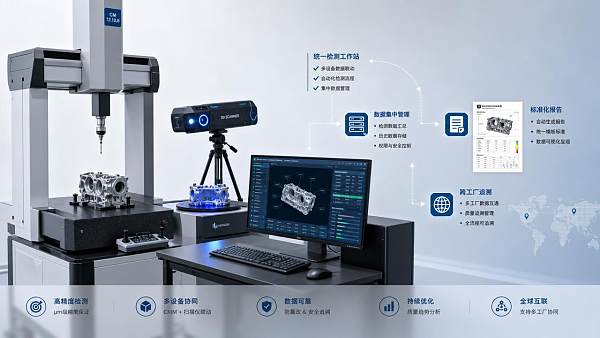
In practical terms, metrology software wholesale often covers CMM programming, 3D scan processing, SPC analysis, reporting automation, calibration traceability, and secure data exchange.
This model matters because quality data is no longer local. It influences supplier qualification, product release, audit readiness, and process correction across the network.
For organizations in aerospace, automotive, electronics, energy, and medical manufacturing, fragmented inspection software creates avoidable risk and hidden cost.
A wholesale approach reduces that fragmentation by aligning software versions, workflows, measurement libraries, and reporting templates under one control framework.
Core functions usually included
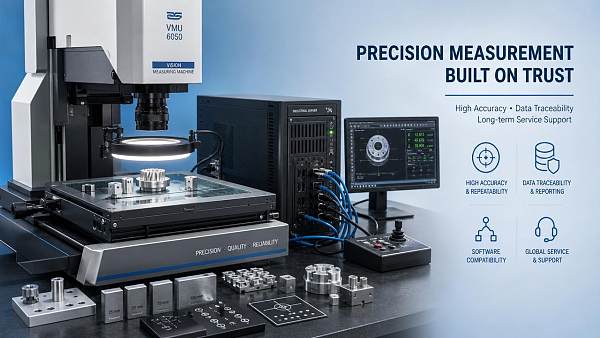
- Multi-device data ingestion from CMM, vision systems, laser scanners, and optical sensors
- Unified inspection plan management and version control
- Automated report generation with standard tolerancing rules
- Cross-site dashboards for capability, nonconformance, and trend analysis
- Role-based access, audit logs, and compliance support
Current industry signals shaping wholesale metrology software adoption
Across the comprehensive industrial sector, inspection is moving from equipment-centric control to data-centric orchestration. That shift is driving interest in metrology software wholesale options.
The pressure comes from tighter tolerances, more product variants, and stronger documentation demands from customers, regulators, and internal quality systems.
These signals explain why wholesale metrology software is increasingly reviewed alongside MES, PLM, QMS, and industrial analytics investments.
Business value of metrology software wholesale for multi-site data control
The strongest advantage is control consistency. When measurement rules differ by plant, process capability comparisons become unreliable and escalation decisions slow down.
Metrology software wholesale helps establish one digital quality language for dimensions, tolerances, feature interpretation, and reporting logic.
That consistency supports faster root-cause analysis. Engineers can compare deviations across sites without spending time normalizing data formats or report structures.
Another benefit is better asset utilization. Shared software architecture allows standard training, pooled expertise, and easier replication of validated inspection programs.
This is particularly important when one plant develops advanced best practices that others need to adopt with minimal delay.
Key measurable gains
- Lower reporting cycle time through automation
- Reduced duplicate programming across sites
- Higher traceability for audits and customer documentation
- Earlier detection of drift, bias, and recurring variation
- Improved governance over software updates and validation
In addition, metrology software wholesale can improve total cost visibility. Enterprise agreements often simplify budgeting for licenses, maintenance, scaling, and support.
Typical deployment scenarios and operating models
Not every organization uses metrology software wholesale in the same way. The right model depends on equipment diversity, regulatory burden, and inspection throughput.
A common priority is linking metrology software wholesale with ERP, QMS, MES, and PLM systems. That connection turns inspection outputs into operational decisions.
When data flows properly, nonconforming trends can trigger corrective workflows, supplier alerts, or engineering reviews without manual handoffs.
Evaluation criteria for selecting wholesale metrology software
Selection should focus on long-term control, not only front-end reporting features. A platform may look capable locally yet fail under multi-site governance demands.
Technical and operational checkpoints
- Compatibility with CMM, vision, optical, and scanning systems already in service
- Support for ISO-aligned traceability records and calibration references
- Scalable user management, site permissions, and audit trails
- Template control for inspection routines and report formats
- Data export options for SPC, BI, and enterprise analytics tools
- Clear licensing terms for expansion, temporary projects, and global support
It is also useful to test data latency, synchronization reliability, and offline resilience. Some plants cannot tolerate interruptions during production-critical inspection.
Another important factor is validation effort after software updates. In controlled industries, update discipline affects both uptime and compliance confidence.
Implementation guidance and common control risks
A successful metrology software wholesale rollout usually starts with standard definitions, not software installation. Feature naming, tolerance logic, and report ownership must align first.
Then, pilot one representative site with mixed workflows. This reveals integration gaps before network-wide deployment and reduces rework.
- Map current devices, software versions, and data outputs
- Define global templates for reports, programs, and approval rules
- Prioritize interfaces with QMS, MES, and analytics systems
- Train users on data discipline, not only interface navigation
- Monitor adoption through data completeness and exception rates
Common risks include over-customization, poor master data quality, and unmanaged local workarounds. These issues weaken the value of metrology software wholesale over time.
Strong governance should assign ownership for template approval, device onboarding, update validation, and KPI review across all participating sites.
Strategic next steps for stronger inspection intelligence
Metrology software wholesale is most effective when treated as a quality infrastructure decision, not a simple software purchase.
The objective is to connect measurement, traceability, and process response within one controlled digital framework that can scale with production growth.
A practical next step is to assess current site-to-site variation in inspection programs, reporting formats, and data accessibility. That baseline reveals where harmonization delivers the fastest return.
From there, compare metrology software wholesale options by integration depth, governance strength, and support for enterprise-level validation.
For organizations pursuing zero-defect manufacturing, the right platform can turn isolated measurements into coordinated action across the entire industrial network.
Recommended News
 May 24, 2026Vision Measuring Machine Wholesale: What Affects Long-Term Service RiskVision measuring machine wholesale success depends on more than price. Learn what drives long-term service risk, uptime, calibration stability, and support reliability before you buy.
 May 24, 2026How to Evaluate a Non-Contact Metrology System OEM for Stable Inline AccuracyNon-contact metrology system OEM selection starts with stable inline accuracy. Learn how to assess calibration, software, optics, and support to reduce risk and choose with confidence.
 May 23, 2026Metrology Software Wholesale: Integration Risks to CheckMetrology software wholesale buyers should verify integration risks early—data compatibility, equipment interoperability, compliance, cybersecurity, and support—to avoid costly rollout failures.
 May 23, 2026Portable CMM Arm OEM for Tight-Space InspectionPortable CMM arm OEM solutions for tight-space inspection help engineering teams speed up verification, reduce downtime, and improve accuracy in crowded production environments.
![]() May 22, 2026Wholesale Coordinate Measuring Machine: Cost vs Calibration RiskWholesale coordinate measuring machine buyers must weigh price against calibration risk, audit readiness, and long-term accuracy. Learn how to source smarter and avoid hidden costs.
May 22, 2026Wholesale Coordinate Measuring Machine: Cost vs Calibration RiskWholesale coordinate measuring machine buyers must weigh price against calibration risk, audit readiness, and long-term accuracy. Learn how to source smarter and avoid hidden costs. May 21, 2026Coordinate Measuring Machines Price: What Drives Total Cost in 2026Coordinate Measuring Machines price in 2026 goes beyond the quote. Discover key cost drivers, hidden expenses, ROI factors, and smarter CMM budgeting decisions.
 May 20, 2026Automated Metrology Case Studies That Justify CapexAutomated metrology case studies reveal how manufacturers cut scrap, boost yield, speed inspections, and reduce compliance risk—giving finance teams clear ROI evidence to justify capex.
 May 20, 2026Metrology in Electric Vehicle Manufacturing: Costly GapsMetrology in electric vehicle manufacturing exposes costly gaps in battery alignment, body fit, and supplier quality. Learn how a practical checklist cuts rework, defects, and warranty risk.
 May 19, 2026Digital Twins in Metrology: Gains and LimitsImpact of digital twins on metrology: explore where they improve traceability, predictive quality, and faster decisions—and where data, cost, and integration limits can hold them back.
 May 18, 2026Impact of AI on CMM Inspection: Faster Cycles or New Risks?Impact of AI on CMM inspection: discover where AI speeds cycles, improves repeatability, and cuts effort—and where data risk, model drift, and traceability issues can undermine quality.
 May 18, 2026Portable CMM Arm Reach Benchmarks for Large-Part InspectionPortable CMM arm reach benchmarks explained for large-part inspection. Compare real-world reach, accuracy, setup efficiency, and selection tips to choose the best system.
 May 18, 2026CMM Thermal Compensation Metrics: What Impacts Accuracy Most?CMM thermal compensation metrics reveal what most affects CMM accuracy, from part temperature to ambient gradients. Learn how to reduce drift, rework, and false rejects.
 May 17, 2026Non-Contact Metrology System OEM: What to Verify Before ApprovalNon-contact metrology system OEM approval starts with proof, not promises. Learn what to verify on accuracy, traceability, integration, and lifecycle support before you decide.
 May 17, 2026Vision Measuring Machine Wholesale: Cost Drivers and Quality ChecksVision measuring machine wholesale decisions now hinge on optics, software, calibration, and service. Learn the true cost drivers and quality checks before placing volume orders.
 May 16, 2026Automated Inspection Cell OEM: Key Integration Risks Before DeploymentAutomated inspection cell OEM selection goes beyond equipment specs. Discover key integration risks before deployment—from software and traceability to calibration, safety, and ROI.
 May 16, 2026Metrology Software Wholesale Options for Multi-Site Inspection Data ControlMetrology software wholesale helps multi-site manufacturers unify inspection data, standardize reporting, improve traceability, and gain stronger quality control across global operations.
 May 16, 2026Choosing a Bore Gauge OEM Manufacturer for Tight Tolerance PartsBore gauge OEM manufacturer selection for tight tolerance parts: learn how to compare precision, calibration, customization, and compliance to reduce risk and improve production confidence.
 May 15, 2026Wholesale Coordinate Measuring Machine: Compare Total Ownership CostWholesale coordinate measuring machine buyers can compare total ownership cost, including calibration, uptime, training, and compliance, to choose a smarter long-term CMM investment.
 May 15, 2026Portable CMM Arm OEM: What Matters in Shopfloor AccuracyPortable CMM arm OEM selection should focus on real shopfloor accuracy, repeatability, ergonomics, software, and support. Learn what truly impacts reliable production measurement.
 May 14, 2026How to Compare High Accuracy Quality Control Systems Before AdoptionHigh Accuracy Quality Control Systems: compare accuracy, repeatability, traceability, and integration before adoption. Discover a practical framework to reduce risk, improve compliance, and choose the right system faster.
 May 13, 20263D Scanning Supplier Checklist for Stable Inspection Results3D Scanning supplier checklist for stable inspection results: compare calibration, software integration, traceability, and support to reduce risk and choose with confidence.
 May 13, 2026Metrology in Electric Vehicle Manufacturing: Where Errors Cost MostMetrology in electric vehicle manufacturing reveals where tiny errors trigger battery risk, alignment loss, and recall costs—learn how smarter measurement protects quality, compliance, and EV scale-up.
 May 12, 2026Automated Metrology Case Studies With Measurable ROIAutomated metrology case studies reveal measurable ROI through faster inspections, lower scrap, stronger traceability, and smarter quality decisions across modern manufacturing.
 May 09, 2026Portable CMM Arm Reach Benchmarks: How Much Range Is Enough?Portable CMM arm reach benchmarks explained: learn how much range is enough for your parts, workflows, and budget, so you can compare systems faster and buy with confidence.